Showing posts with label Jerusalem Project. Show all posts

Monday, December 21, 2020

Week 36 - Caramelizing

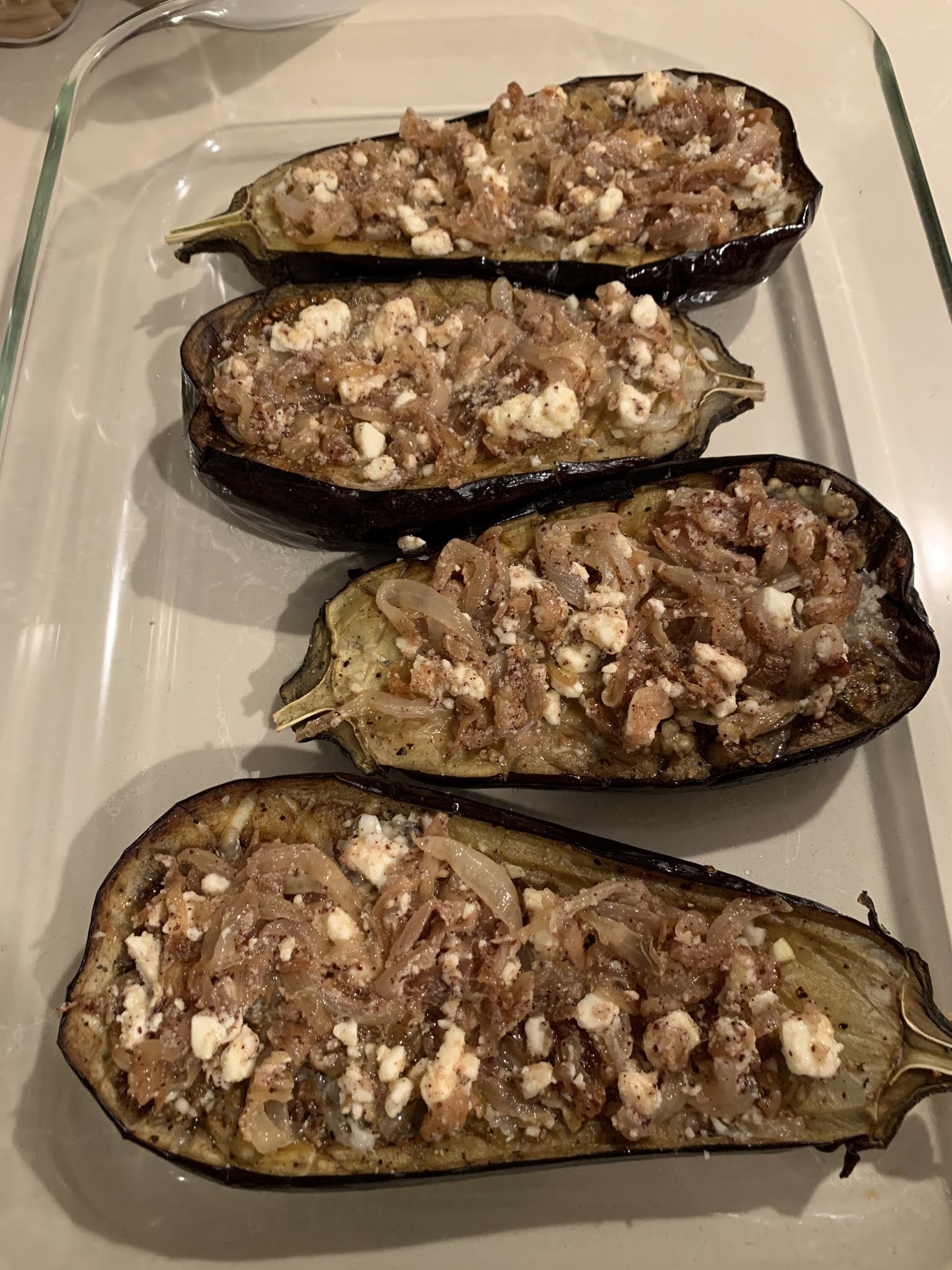
I love caramelized onions. They take so long to make, but they're so delicious. The Week 36 challenge, caramelizing, was a repeat of a challenge I did in 2014 when I also made caramelized onions, but I was definitely going to do it again because I like caramelized onions so much. I found a bunch of recipes online that sounded good, but then realized that the next recipe we were going to try in Ottolenghi's Jerusalem would be great with caramelized onions instead of fried onions, so decided to make that instead.

The recipe was for roasted eggplant with fried onion (here, caramelized onion) and chopped lemon. I was a little skeptical of the chopped lemon with raw garlic being added on top of the eggplant, thinking that both had some very strong and overpowering flavors, but I've trusted Ottolenghi many other times with combinations I didn't think I'd like, so I tried to follow the recipe as closely as I could (omitting the green chiles and substituting with just a dash of cayenne so it wouldn't be too hot for B).

The ingredients for the eggplant dish were:

- 2 large eggplants ($4.33)
- 2 tbsp + 1/2 cup olive oil ($1)
- 3 medium onions ($1.89)
- 1.5 tsp ground cumin ($0.10)
- 1 tsp sumac ($0.10)
- about 1/4-1/3 cup crumbled feta ($0.50)
- 1 lemon ($0.79)
- 2 cloves of garlic ($0.10)
- salt and freshly ground black pepper ($0.03)
- dash of cayenne pepper ($0.01)

We ate the eggplant alongside some turkey meatballs, since the recipe suggestion was to serve it with the turkey and zucchini burgers (which I made for a challenge in 2016). I had a feeling I was going to have enough to do with the constant monitoring of the caramelized onions that I wasn't going to have time to make something else from scratch (and I was right), so we just made some meatballs in the microwave that are one of our freezer staples from BJ's. The total for the eggplant was about $8.85, and the whole meal cost about $11.85 (not really sure how much each meatball portion cost). It was enough for the three of us for dinner, although maybe we would have been less full if B had actually liked the eggplant.


The steps for making the eggplant (our version with caramelized onions) were:

1. Slice onions into thin slices.

2. Heat 1-2 tbsp of olive oil over medium heat until shimmering. Add the onions and stir until coated with oil. Spread the onions evenly and let cook for 10 minutes.

3. While the onions are cooking, preheat the oven to 425 degrees. Wash the eggplants, and then halve lengthwise with the stem on.


4. Score the cut side of the eggplants with a criss-cross pattern, and then brush the cut sides with olive oil (the 1/2 cup). Sprinkle with salt and pepper. [Don't be me - I forgot to do the salt and pepper, and had to pull it back out of the oven a couple of minutes in to do it.]

5. Place the eggplants on a greased baking sheet cut side up, and put on the top rack of the oven. On the bottom rack, put a baking pan filled with a shallow layer of water to keep the eggplants from drying out.

6. Roast the eggplants for about 45 minutes until the flesh is golden and cooked.

7. After the onions have cooked for 10 minutes, add a little salt, stir around, and cook for at least an hour until caramelized. Stir every few minutes, letting them brown a little bit (but not burn) and then stirring, deglazing as needed. Adjust the heat if needed to prevent burning. [Ours took over an hour... That set dinner back a bit.]

That does not look like THREE onions

8. Once the onions are done, add the cumin, sumac, and cayenne pepper. Cook for 2 minutes, then add the feta, and cook for another minute before removing from heat.

9. Mince the garlic, and put in a small bowl to be combined with the lemon.


10. Remove the skin and pith from the lemon, and coarsely chop the flesh, removing the seeds, adding the flesh and juice into the bowl with the garlic. [This was the (paraphrased) instruction from the recipe. I had never done this before, so I wasn't sure if I needed to remove everything but the pulp. I ended up pulling out all the inside juice segments and adding them to the bowl, breaking them up with my fingers and squeezing out whatever juice I could. Where was the juice supposed to come from if you were chopping the lemon on a cutting board? This whole instruction confused me, and this was the first recipe in the book that didn't show the finished product so I couldn't examine that for hints.]

11. Assemble the eggplants in a serving dish when done, topping it first with the lemon and garlic mixture (rubbing it into the flesh a little bit), and then spooning over the onion-feta mixture.


The entire process of making this dish took me about 2 hours between the time it took to caramelize the onions (plus some extra time since there was some unexpected mold on the outside layer of the onions to deal with) and all the other tasks that just added up. Unfortunately, it wasn't an unqualified success. The onion-feta mixture was delicious. I could have eaten a giant bowl of that by itself, but three onions once caramelized became such a small bowl! (That's the worst part of caramelizing onions. You get so little when it's over.) The part I was most worried about - the lemon and raw garlic - worked really well with the eggplant and wasn't that overpowering for me, just a nice hit of garlic and citrus.


The eggplant, however, had tough skin (other than the middle) and some tough flesh near the stem and the cut parts of the skin, and I was just so disappointed. It wasn't as dry as the last time I made eggplant, but it wasn't what I hoped it would be, and the parts with tough, chewy skin just ruined the whole thing for me, so I ended up scraping out a lot and leaving the skin. A bite of soft skin from the middle with the tender eggplant and the onions and cheese and lemon and garlic all together was actually delicious, but there were so few of those perfect bites.


Would I make this again? The onion combination, maybe, although it took a while and would be easier to just saute it or roast it and then add those seasonings. The whole dish, probably not. Why can't I roast eggplant properly? Why was the skin so tough? I re-checked the recipe after dinner to make sure I hadn't messed up and wasn't supposed to also oil the outside skin of the eggplant, but it definitely only said to brush the cut side, so what did I need to do differently so that all the skin would be soft enough to eat? Also, B wasn't a fan of the eggplant at all, and I didn't even give him the skin, so I'd rather make something he likes better.

Jerusalem Cookbook Project Rankings:

4. Roasted eggplant with fried/caramelized onion and chopped lemon (pg 33) (if we were just ranking the onion mixture, this would be higher!)

Wednesday, September 9, 2020

Week 34 - Figs

The Week 34 challenge came up as figs, which weren't the easiest thing for us to get in a pandemic, so I considered skipping it. Since I'm not a huge fan of mixing fruit into savory dishes, if I did get figs, I was just going to want to make Ottolenghi's roasted sweet potatoes and figs again, which I already did for a challenge in 2017. A couple of people on Reddit mentioned their difficulty in getting figs, and it was suggested that perhaps they use something like dates, since those are often interchangeable with figs in recipes. Considering the next recipe in Ottolenghi's Jerusalem used dates, that seemed like a logical place to go.


It took two years to make the first two recipes in Jerusalem, and over two years since the last one, we were finally moving on to the third recipe. I really thought we would move through the book a little faster than this, but first, not cooking that much for the second half of pregnancy plus the first 9 months or so after B was born, and then being in the salad section of the book which isn't super new eater/toddler-friendly, continuing on this cookbook project wasn't really on my mind. Since pandemic living meant we had different options for incorporating new meals into our days, I decided to make this for lunch since A was thankfully still working from home and B wouldn't really be able to eat it with all the chopped nuts.

The third recipe in the book was for a baby spinach salad with dates and almonds. Although I didn't love that I would need to mix fruit with savory again, after how well the first recipe in the book turned out (the sweet potatoes with figs), I trusted Ottolenghi on this one. Other than not measuring everything, I tried to stick closely to the recipe, hoping it would come out as intended.


The ingredients for our version of the salad were:

- 1/2 red onion ($0.50)
- 2-3 handfuls of Medjool dates ($1.66)
- about 1 tbsp white wine vinegar ($0.07)
- salt ($0.02)
- 2 tbsp butter ($0.18)
- about 2 tbsp olive oil, divided ($0.20)
- 1.5 whole wheat pitas (about 3.75 oz) ($1.39)
- 1/2 cup whole roasted and unsalted almonds ($1)
- a couple tsp sumac ($0.15)
- a few shakes of red pepper flakes ($0.02)
- 1 bag of baby spinach ($2.29)
- juice of 1 lemon ($0.39)

The salad cost about $7.87, which was less expensive than almost any lunch we would get if we dined out. Sounded good to us!

I thought this salad was relatively straightforward in terms of prep and that it wouldn't take more than half an hour, even at my glacial speed. The one thing I didn't account for, however, was that I'd never worked with Medjool dates before. I'd had dates, but never made them at home, so I had a lot of questions. Did they need to be washed? Did I need to peel the skins off? How would I know if they were fresh (even though we just bought them two days earlier)? The problem was, having never had one whole before, I didn't even know the questions to ask in advance, so I had to keep pausing to look things up, and as a result, prepping took far longer than it should have.


The steps for making the salad were:

1. Prep (part 1) - thinly slice the onion, remove the pits from the dates, and quarter the dates lengthwise.

2. In a small bowl, combine the white wine vinegar, onion, dates, and a pinch of salt. Mix with your hands, and marinate for about 20 minutes. [The instructions said to drain the residual vinegar here and discard, but we didn't have any.]


3. Prep (part 2) - coarsely chop almonds, and tear pita into pieces about 1.5 inches in width.

4. In a medium skillet, heat the butter with about 1 tbsp of olive oil over medium heat. Add pita and almonds, and stir continuously for about 5 minutes until the pita is crunchy and golden (or in our case, browned since we used whole wheat pita).

5. Remove skillet from heat, and add the sumac, red pepper flakes, and a pinch of salt. Allow to cool a bit. [We didn't have that much time, since my Medjool dates research took so long, but at least allowed it to cool enough to be touched without burning my hands.]


6. In a large bowl, add the spinach, pita and almond mixture, date and onion mixture, another tbsp of olive oil, and the lemon juice. Mix well. [I needed to use my hands because nothing else was working.] Season to taste if needed. [Nothing needed to be added here.]

This salad turned out really well! It was far more filling than I thought it would be before making it, but it did have a lot of pita and almonds in it, in addition to the dates. The sweet dates worked well with the rest of the salad, and it still made for a good savory salad. Although not our favorite salad, we would make this again.


Jerusalem Cookbook Project Rankings:
2. Baby spinach salad with dates and almonds

Friday, May 25, 2018

Fattoush

One of the things I've always wanted to do was cook from a cookbook cover to cover. (Well, as much as possible considering dietary and kitchen restrictions, some self-imposed.) I imagine this started back when I read Julie & Julia (well before the movie came out), and just thought that was such a great way to learn and challenge yourself. I also love buying cookbooks, and we haven't made 95% of the recipes in the ones on our shelves, so it's sort of a practical mission as well. I'm not disciplined enough or singularly focused enough to want to go page by page on a weekly basis or daily basis, so I imagine any cookbook challenge I do will take a while (and a few may even run simultaneously), but I think it's a good way to use what we have and continually try new things.


We started with the first recipe in the Jerusalem cookbook last year, and now that we're finally getting settled in our new home, it was time to move on to the second - Na'ama's fattoush. I tried to stick closely to the recipe, but there were a couple of things I didn't measure. The ingredients we used were:

- 1 cup whole milk yogurt ($1.25)
- 3/4 cup + 2 tbsp 2% milk ($0.28)
- 2 pitas ($0.70)
- 3 tomatoes ($1.19)
- 4 mini cucumbers ($1.33)
- 6 scallions ($0.52)
- a handful of fresh mint (about 1/2 a package) ($0.85)
- a bunch of fresh parsley ($0.40)
- 5 radishes ($0.50)
- large spoonful of minced garlic ($0.10)
- about 1/4 cup olive oil ($0.30)
- about 2 tbsp apple cider vinegar ($0.10)
- juice of 2 lemons ($0.98)
- salt and pepper ($0.05)
- sumac to garnish ($0.10)

The salad came out to about $8.65 (not helped by the fact that lemons are not cheap right now and I wanted to use real lemon juice because it was a salad), but considering how much it made, it really wasn't a bad total for dinner, even after adding the two panko chicken tenders we ate it with.


The first step had to be done hours in advance (probably 4-5 hours in our case), which was to mix together the yogurt and the milk and then leave it in the fridge. The result was supposed to have bubbles on the top after a few hours, but I don't know if I did it right, because there were bubbles on the top as soon as I was done mixing. The goal was to be like buttermilk, but less sour, but since we don't really ever taste buttermilk on its own, we had no idea whether that was really the case. We used it anyway, since it tasted like yogurt and yogurt dressings are good.

When it was actually time to make dinner, the first thing I did was chop up the pita and pop it in the oven on a dry baking sheet at 350 degrees for a little over 10 minutes. You're supposed to use stale pita in this recipe, but I'm not a big fan of leaving bread out to get stale (bugs...), and we just bought the pita the day before, so this seemed the most efficient way of drying it out.


The next and most time-consuming step was all the vegetable prep: dice tomatoes, dice cucumbers, thinly slice radishes, thinly slice scallions, coarsely chop parsley and mint. The recipe itself actually said to put the pita in first, followed by the yogurt dressing, followed by all the other ingredients, but since we're still working on our kitchen arrangements, we didn't yet have the counter space for that. I wasn't really sure what the difference was, since the pita, yogurt, and vegetables were to go into the bowl in quick succession anyway, so into the bowl went all the vegetables as I chopped, followed by the pita pieces and the yogurt dressing, and then all the other seasoning/dressing ingredients like the olive oil and vinegar.


As we mixed it up, it just seemed to be really heavy on the liquids, definitely more than the stylized photo in the cookbook. That seemed like more vegetables than dressing, and ours seemed like yogurt everywhere in an overwhelming amount. It didn't really look pretty, but when we tasted it, it tasted good so that was fine. Appearance isn't everything. We left it for about 10 minutes for the flavors to meld and hopefully for the dressing to thicken up (it only did a little bit), and then spooned it into bowls with the sumac on top.


The salad was light and refreshing, had a good amount of flavor, and worked well with the chicken we ate it with. While we both liked this salad and thought it was tasty, it probably won't enter our regular rotation. If we're in the mood for a salad of this type, sure, we'd make it again, but it's not going to be top of mind most likely when we're making our meal plans. I think to keep track of what we've made for this cookbook project, it might be helpful to rank what we've made in order by how much we liked it, so right now, here they are:

Jerusalem Cookbook Project Rankings:
1. Roasted sweet potatoes and fresh figs
2. Na'ama's fattoush

Thursday, September 14, 2017

Week 32 - Salad

For over a year now, I've carried around a list in my phone of ingredients for a recipe that I hoped to make, roasted sweet potatoes and fresh figs, the first recipe in the cookbook Jerusalem by Ottolenghi. I was hoping to start a cookbook project where I started from the beginning and just made the recipes in order, skipping over any that we wouldn't make at home normally (deep frying, for example) or couldn't eat for intolerance/allergy reasons. But the ingredients sat and sat in the notes app on my phone, waiting for the day when we could find the fresh, ripe figs that would be needed for the recipe.


When we were at Trader Joe's during the weekend of their anniversary sale (and what a great sale that was), A noticed that there was a big display with boxes of fresh figs. They looked pretty good, and after getting advice from a nice gentleman who was buying multiple boxes for himself, we picked one up and decided we would finally get around to making this recipe. I didn't think of it at the time but realized later it would be perfect for the Week 32 salad challenge.

The ingredients for the dish (adapted from the original) were:

- 4 sweet potatoes, small to medium sized
- olive oil
- salt and pepper
- 3 tbsp balsamic vinegar
- 1 bunch of green onions
- chili flakes
- 8 fresh figs
- 5 oz goat cheese

For whatever reason, I kept thinking of this like an appetizer so wondered if we needed to eat more afterwards. But when I stopped to think about it rationally, it would be equivalent to eating 2 sweet potatoes each, which would be enough for a good dinner.


The steps for making the dish (as adapted) were:

1. Wash sweet potatoes and slice lengthwise, continuing to slice into wedges until they are desired thickness.

2. Cover sweet potatoes in olive oil, and top with salt and pepper.

3. Bake sweet potatoes skin side down on a baking sheet at 475 degrees for about 25 minutes. [They were definitely done by then, but probably could have done it for less time.]

4. Once sweet potatoes are soft, remove from oven and allow to cool to room temperature.

5. Make the balsamic reduction by adding the balsamic vinegar to a small pot, and simmering until it thickens.


6. Wash and chop the green onions into medium sized pieces.

7. Add olive oil to sauce pan, add green onions, and shake on chili flakes. Cook for a few minutes until green onions are softer but still have some sturdiness to them.

8. Slice figs into quarters.

9. Plate! Sweet potatoes on the bottom, then the green onions and infused olive oil, then figs, balsamic reduction, and topped off with crumbled goat cheese.


Wow. That was really, really delicious. I didn't doubt that the dish would be good since we've had Ottolenghi salads from our time in London, but that first bite of a little bit of everything together was amazing. And I say this as someone who doesn't especially love fruit in savory dishes, but this definitely worked. Not a ton of ingredients, but every one played a role in the flavor. We would definitely make this again.