Showing posts with label Salad. Show all posts

Sunday, March 31, 2024

Week 12 (2023) - Three Sisters

In Native American culture, the three sisters were corn, squash, and beans, three crops that when planted together, all supported each other to grow and thrive. Those three ingredients were found throughout many Native American recipes, and although we eat plenty of corn, squash, and beans as a family, and it would be easy to find recipes that included any or all of them, I knew I wanted to make something indigenous to the Americas to truly represent this theme. I requested a bunch of cookbooks from the library, and after skimming through them, I settled on the three sisters salad with shallot vinaigrette from The New Native Kitchen: Celebrating Modern Recipes of the American Indian, by Chef Freddie Bitsoie and James O. Fraioli.


The salad included onions, garlic, carrots, celery, thyme, zucchini, corn, white beans, and spinach, with a vinaigrette consisting of lemon juice, shallots, garlic, and olive oil. The vegetables are all cooked, so this was more of a warm/room temperature salad.


We liked this salad, especially the flavors of the vinaigrette. It tasted light and healthy, and was a good match for the heavier components of our dinner (rotisserie chicken and garlic bread). The recipe intro stated that they couldn't match this summer salad (which we ate in early spring) to any particular community, but for us, this will be for the AtWCC for the USA. Since we're doing each state and territory separately, we'll be counting the indigenous recipes that we try there. Now that we've found a bunch of cookbooks, looking forward to trying more!

Wednesday, October 4, 2023

30s (2023)

I really, really, really need to get better about posting and documenting things here before I am two years behind on cooking challenge memories. We're in Week 40 now, so this is probably as on-time as I've been in a while. This set is from the "30s" weeks and anything not covered separately/by the AtWCC.

Week 31: mint

I wasn't feeling very creative when the mint challenge came up, and even after doing some internet research, my best options seemed to be either a sauce with mint (similar to the yogurt sauces we were doing during the Afghanistan AtWCC) or a salad. Since it was the middle of July and I always want salads when it's hot, that was an easy choice. I decided on a summer salad with mint that I saw on The Clever Meal, with chickpeas, roasted red peppers, cucumber, feta, and of course, the starring ingredient for this challenge, mint (both chopped and whole leaves used as a garnish).


I don't often buy mint for salads, even though I know it's great in them, because it just goes bad so quickly, so this was a nice change. The dressing consisted of olive oil, fresh lemon juice, garlic, agave (swapped for honey), dijon mustard, salt, and pepper, and it went really well with the salad. Very nice, refreshing salad side dish. The only negative here was that the salad ended up costing around $12, with the cost of feta (since we ran out of our Costco-sized box and I had to get it from the local store) and mint being about 54% of that total. I haven't been doing the cost breakdowns as much as I used to (just not as much time with a little one running around and playing, which also shows in how rarely I get a post up timely), and it was a bit of sticker shock when I finished doing the math. Not the fault of the recipe, but the cost of groceries is just so high right now!

Week 33: Cutthroat Kitchen

I used to watch Cutthroat Kitchen back when we had cable, so when this theme came up, I had no idea how that would get implemented as a cooking challenge. Apparently, a lot of people wondered the same thing, so it was suggested that you basically sabotage yourself in some way. Considering I really hate food waste, and the chances of making something inedible were high if I were to use some of the actual Cutthroat Kitchen sabotages and be surprised by them, I decided to just use two "sabotages" from the start: using the microwave as the only cooking appliance and giving up my usual knives in favor of B's child-safe knives. This did mean I could plan in advance, but neither would have been my go-tos for the meal I chose.


I decided to microwave fish, since I remembered my mom used to do that when I was younger, and adapted a fish recipe from Chew Out Loud. Along with that, I made some microwaved green beans (recipe from Baking Mischief) and brown rice (instructions from Hungry Huy). I was most worried about the rice, because when I used to microwave rice, I had a specialized container that was used for microwaving rice. I wasn't sure how it would do with just a dish towel, but it turned out to be fine. Not as good as the stove or the rice cooker, but fine. I thought the green beans might be a little soft and overdone, but they were actually perfect. Greener than when I cook them on the stove, not overcooked mush, not too crunchy. I think I might do this more. I was pretty confident in the fish, since we'd done that before with other recipes, but I liked this so much that it might become a recurring recipe in our meal plan. I would use my own knives on the onions and scallions though, because these were a bit of a mess with kid knives. Pretty successful partially "sabotaged" meal!

Week 34: chips/crisps

This one was a tough one for me to choose, because I've been trying to choose some healthier meals to make (although the recent week that included both Swedish meatballs and shrimp and grits on the meal plan was a bit heavy...), and chips/crisps don't necessarily lend themselves to that. In the end, I decided to make Frito pie based on a Spend With Pennies recipe


A layer of Fritos, a layer of cheese, a layer of meat (used Impossible) mixed with onions, Rotel, tomato sauce. beans, corn, and taco seasonings, another layer of cheese all baked in the oven and then topped with Fritos. I debated counting Frito pie for Texas or New Mexico, but as of the time of the challenge, hadn't found a clear answer on where it originated and whether it started as a walking taco or not, so for now, not part of the AtWCC because I need to do more research (and maybe make it again).

Week 35: Afghan


Usually this type of challenge would lead to its own AtWCC post, but this time, I remade the kebabeh degee morgh that I made from Parwana and already posted about. It was just as good making it from my cookbook notes as it was from the original cookbook page, which felt like a success. Highly recommend this one if you're looking for an Afghan curry.

Week 36: reduction


I was really not inspired when I saw the reduction challenge, as my mind immediately went to sauces, something I don't tend to make much of when cooking dinner. After mulling it over with A, he mentioned making tiny sized versions of foods, and that sparked some ideas. Tiny was probably a bit more work than I had time to do (and no food tweezers), but a reduced size version of chicken pot pie made in a muffin tin? That would work. I used a recipe from AllRecipes and made one with condensed chicken soup, canned chicken, mixed vegetables, cheese, and seasonings stuffed into biscuits. They were delicious, no (reduced) sauce needed.

Week 38: wartime


I first learned of Depression cake (aka war cake) from B's preschool when discussing egg-free cake alternatives. I knew about rationing during the war and shortages during the Great Depression, but not specifically this type of cake which didn't include any eggs, milk, or butter. I wasn't sure what to make for the wartime challenge, but A suggested this immediately, and it seemed like the perfect idea. I followed a recipe from Budget Bytes, and overall it turned out good, except it completely stuck to the pan on the bottom and came out a bit messy. Not sure what I did wrong. Maybe slightly too much oil? The cake parts itself were fine, and the frosting wasn't bad, but it wasn't as "presentable" a cake as I was hoping it would be. At least taste and texture were good!

Another set of successful challenges!

Wednesday, January 4, 2023

The Middle Third

Quick blurbs on the middle part of the challenge, many of which feel so long ago. Besides challenges already posted (at least there were a few this time!), skipping weeks 19, 24, 25, 28, 30 for the shared AtWCC posts that will come at some point, and week 21 because I wrote most of it already.

Week 18: garlic


The Tasty recipe was called 40 clove garlic chicken, but the three heads of garlic I used ended up being around 45. We love garlic in our household, so even more garlic was not a problem! This was delicious, and not as garlicky as one would think for 45 cloves. It was much more manageable than the vegetable pizza covered in whole roasted garlic cloves that I ate at Planet Hollywood when I was around 10 (still remember that one; it made an impact). We would definitely make this again.

Week 20: zero waste


We had a few very ripe bananas on the counter that I forgot about, so turned them (and a bunch of other ingredients already in the pantry) into banana pancakes based on a Nora Cooks recipe, so they wouldn't go to waste. Not really much else to say about this challenge. The banana pancakes were fine, but we've made pancakes like this, possibly even these exact ones, before.

Week 27: made the wrong way


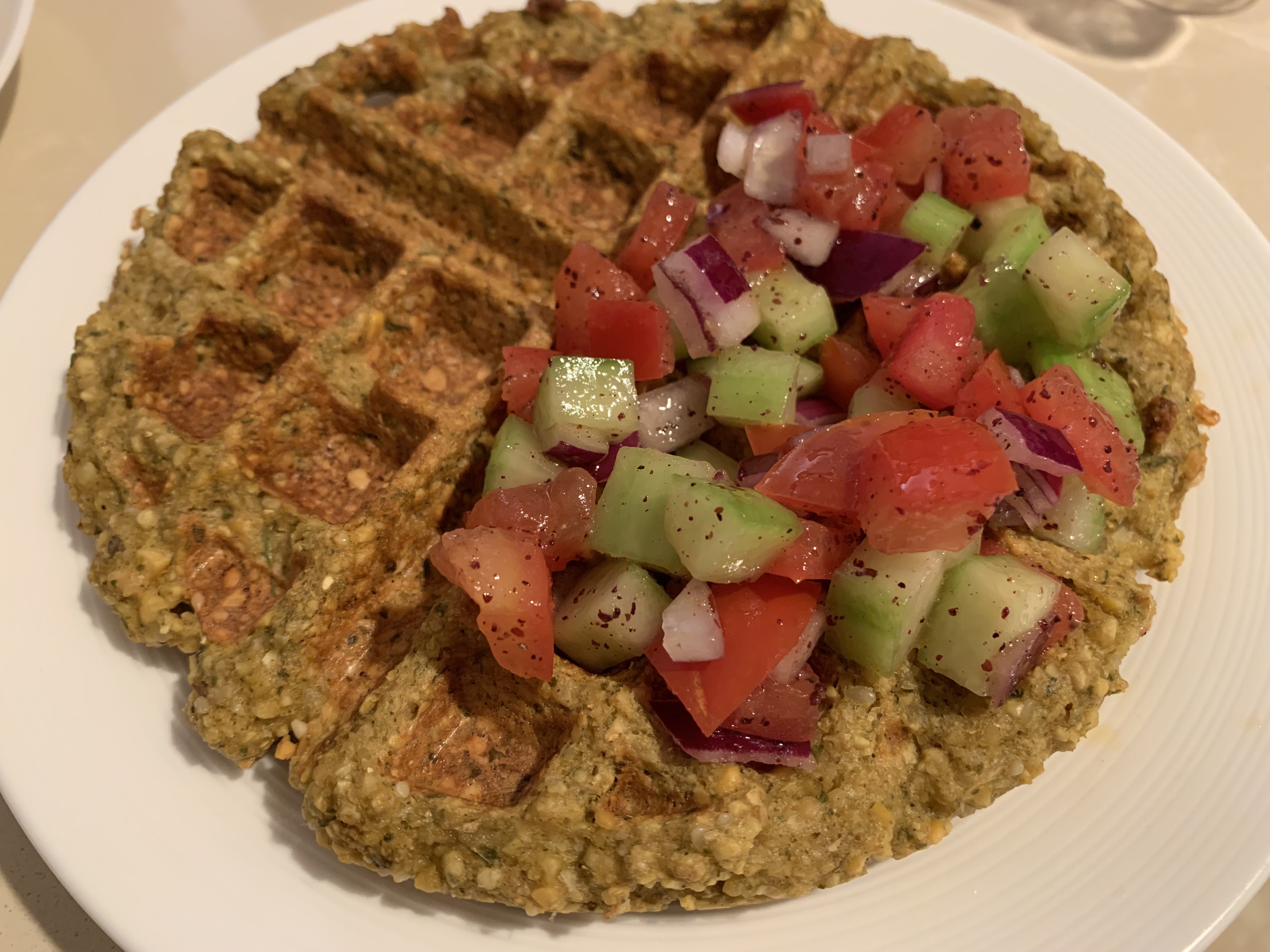
In what will probably be my best-performing post ever on Reddit, I made falafel waffles. This one really stumped me because I personally don't really think that many things can be made the "wrong" way. Unconventional, maybe, but not necessarily wrong. I went with falafel waffles, because they sounded fun, and using the "wrong" appliance/cooking method seemed like the closest I was going to get to finding something to complete this challenge. Apparently it was a winning idea, but I don't even remember where I first heard about it years ago. We made the falafel in the waffle maker and topped the waffles with salad. I also attempted to fold one around the salad, sort of like the Taco Bell naked chicken chalupa, but it all fell apart. This was fun to try.

Week 29: shredded


I think this July dinner is where the series of chicken salads began. I made the poached chicken and cabbage salad with cashews and miso dressing from Kenji’s cookbook, The Wok, and it had lots of shredded ingredients - chicken, carrots, scallions, and cabbage. I also added corn so B would have something he liked. This was a very refreshing summer salad.

4 more done, 18 more to go!

Monday, December 26, 2022

The Last Third

Time for a group challenge post for the last third of the year! Skipping weeks 40, 41, 45, 47, and 51 because they're also for the AtWCC and week 49 because I already wrote most of that one separately. Not sure if I'm going to get all these posts done before the end of the year, but I'm going to try my best!

Week 36: smashed


My immediate thought when hearing "smashed" was smashed potatoes, probably because A makes them so often (and so well). With A's help, I put together loaded smashed potatoes (based on a recipe from Budget Bytes) topped with cheddar cheese, (vegan) sour cream, bacon bits, and red onions. We don't usually top them with more than garlic and herbs (and they are delicious that way), but it was nice to try something different, especially that tasty melted cheese.

Week 37: honey


I stumbled upon a honey butter biscuit copycat recipe on Let's Dish when doing research for this challenge, and they sounded like a good thing to try since I'd never been to the Texas-based Church's Chicken chain before (and A had never had the biscuits). They apparently sell millions of biscuits a year and have even trademarked the term "Honey-Butter Biscuit" (not sure how since that sounds like a generic description to me, but I'm not a trademark professional). The biscuits were good, although I think I might have cooked them too long since the honey butter browned a bit too much on the bottom, and I personally prefer my drop biscuits not so sticky. Maybe we'll give these another try for the Texas part of the AtWCC.

Week 38: cultured


They announced the week 38 theme far in advance for people who wanted to do things like culture their own yogurt, but that was still far beyond my comfort level for safety reasons, so I figured I would just stick to using a cultured product like yogurt. I went with Molly Yeh's yogurt-marinated chicken skewers which were flavored with ras el hanout and harissa, and skewered with peppers and onions. These came out good, but probably not something I would make regularly at this point considering the marinating time and how long it takes me to skewer things.

Week 39: soaking


I like having overnight oats for breakfast, but they've become a bit of a running joke in our household because I'm always talking about them and rarely making them because I forget to set them up at night. This challenge was the perfect motivation to actually make them, and this bowl was overnight oats with almond butter, oat milk, chia seeds, flaxseeds, cinnamon, maple syrup, and topped with blueberries and blackberries. I really do need to make them more.

Week 43: punny names


"Punny names" is the type of concept challenge that I'm not good at picking recipes for. I spent a long time googling punny foods, punny recipes, and all variations of that, but found very few things that interested me. Eventually, I got attached to the idea of doing pizza for "pizza my heart," but at the end decided on "little pizza my heart," which made more sense because I was making little flatbread pizzas. The pizzas were topped with artichoke pesto sauce, mozzarella, provolone, and Parmigiano-Reggiano cheeses, and a pancetta and mushroom heart. I was actually really happy with the combination flavor-wise, and the hearts, while more difficult to make than I thought they would be, kept their shape thankfully.

Week 44: Greek


The country weeks are usually a no-brainer for doubling up with the AtWCC, but I wasn't in the mood for trying regular spanakopita when this challenge rolled around. I don't know why, but I was really fixated on making it into a Christmas tree. (Note: It was not Christmas or December, not even Halloween yet.) I followed the recipe on Dimitra's Dishes for the spanakopita Christmas tree, and with a little help from A for making the tree "branches," it turned out pretty well. Probably more time-consuming than making regular spanakopita, which I'll likely do next time instead, as fun as this was.

Week 48: leaves


There are lots of things you can do with leaves, but I naturally gravitated toward salad. Now, if I had been doing these in order, you would have known that I made at least three other chicken-based salads in the second half of the year. I can't explain why, but my brain just really wanted salads like this, so I just went with it. This one was very loosely based on a Food52 recipe for a farmhouse chicken salad, and the leaves I ended up using were arugula, parsley, tarragon, chives, and thyme. I also made some tarragon radishes on the side. Good salad, but a ton of work with all those fresh herbs, so this is probably a one-time thing if made exactly like this.

Week 50: rosemary


Last one for this batch! I thought I might end up using this for the AtWCC too, but it was not meant to be. I chose rosemary aloo paratha based on another Food52 recipe, since I'd always wanted to try making paratha and rosemary and potatoes were such a good combination. (I didn't want to make more smashed potatoes since I had just done that for a challenge recently.) Unfortunately, there was something wrong with one of our potatoes and it just would not get soft enough for mashing despite being fork tender when boiled. I should have just used instant mashed potatoes but I was trying to do it the "right" way. That meant that the chunks of potatoes that wouldn't mash broke through the dough, and the whole thing was a mess. I'll try paratha again for the AtWCC, and hopefully it'll come out better next time.

Monday, February 28, 2022

Week 46 - Seeds

I wasn't thrilled when I saw that the Week 46 challenge was seeds, because a lot of seeds are still choking hazards for little kids. But after reading some discussion about it and learning that beans are in fact seeds, I decided to try a new recipe for a bean-based salad from Once Upon a Chef.


The seeds part of the challenge was met with kidney beans, black beans, and chickpeas. I also topped the salad with some avocado. Although not using the seed itself, it does have a very large seed in the middle, so somewhat on theme!


Even though it was fall, I'm often looking for salads to lighten things up, and this one definitely worked for that. I would make this again!

Monday, December 28, 2020

Week 37 - Bacon

I wrote almost all of this post in September. Not sure why I never finished it and posted it, but considering all the time references in the first half of the post, try to pretend you're reading it in early fall...

Salads aren't the easiest thing for a little one to eat (a point I think I've made on here several times in the past), so a salad wouldn't normally have been my first choice for the Week 37 bacon challenge. But when looking for something to make, I found a vegan BLT pasta salad on This Savory Vegan, loved the sound of the recipe, and decided to make my own tempeh bacon to go with it. I figured there would be enough other stuff in the salad that the greens wouldn't be a huge part, so B would be able to eat it.

Salad, but where's the bacon?

Then I put together my grocery list, A went to Trader Joe's, and no tempeh. I started reading on various grocery threads about tempeh being missing from other grocery store shelves. Someone said something about the tempeh at Trader Joe's undergoing recertification and returning at the end of October. (No idea if that was true.) Whole Foods had tempeh available, but by the time we put in a delivery order, they were out (and out for a while after that). Amazon Fresh had no tempeh. I didn't want to order any Lightlife products after their disastrous ad campaign, but I was getting desperate and willing to buy it. But their tempeh and even the Lightlife already-made-and-seasoned tempeh bacon strips were out of stock at our delivery options.

And that's how we ended up with our non-vegan but egg-free BLT pasta salad. I really wanted to make a vegan version of this, but with The Great Tempeh Shortage of 2020, that just wasn't going to happen. If I knew I was going to use regular bacon, I probably would have made something other than a salad, since what attracted me to the salad in part was the tempeh bacon since it's texturally different from pork bacon, but it's 2020, and who can predict grocery shortages these days?


Anyway, I went ahead with the same recipe for the vegan BLT pasta salad but just replaced the vegan bacon with the bacon we had in the freezer. The ingredients for our version were:

for the dressing:
- 1/2 cup Vegenaise ($1.25)
- 1/4 cup olive oil ($0.40)
- 2 tbsp apple cider vinegar ($0.14)
- garlic powder ($0.03)
- small bunch of parsley ($1.18)
- salt and pepper ($0.02)

the rest of the salad:
- 2/3 package pasta ($2)
- 3 strips of bacon ($1.50)
- 12 oz grape tomatoes ($2.09)
- 1 avocado ($0.75)
- 1/2 red onion ($0.50)
- 2 green onions ($0.25)
- 1 large head of romaine ($2.49)

The salad cost about $12.06. It did make a lot of salad by volume, way more salad than you would get at any of the salad chains for that price. If I had made it with tempeh bacon, it would have cost more than that, but if I had more bacon than the three strips in the freezer, it would have cost more too.


The salad took a while to make, mostly because of the prep involved - making the pasta, frying the bacon, washing and chopping the tomatoes, cubing the avocado, slicing the onion, finely chopping the green onions, finely chopping the parsley, making the dressing, and then the most time-consuming part, chopping the romaine into thin strands. If this salad was just for A and me, I would have probably roughly chopped the romaine, not caring how it ended up in the salad. But B hadn't had much lettuce yet because it's a tougher thing for young kids to eat, so I had to slice the romaine into thin strands including part of the rib in each slice. With limited counter and cutting board space, getting the romaine done took a while.


Assembly was easy. I mixed together all the salad ingredients other than the pasta and the bacon, added the dressing, and then added the pasta (since we cooked the whole package) until it looked like a balanced amount compared to the vegetables, continuing to mix until the dressing had coated everything. The reason I didn't add the bacon was because I had fried it until it was very crispy, and upon crumbling it, it seemed a little too crunchy for B. So I left it on the side to top our salads. The salad without the bacon, after tasting it, seemed very bland. The bacon pretty much added all the flavor, but that's what we were expecting for a BLT salad. Of course, the next time I made bacon and it was crispy, B tried it and loved it, crunch and all, so I guess I could have added it here and mixed it in.

Fast-forward to December...


This post has been sitting in drafts for so long that I ended up making tempeh bacon like I wanted to originally (but with a side of potatoes instead of in a salad) before posting. It didn't taste exactly like bacon, and you could definitely tell the difference, but it was delicious. I now see why the tempeh recipe I followed used two packs of tempeh, because we finished our single package very quickly and wanted more. I wish I had been able to use this tempeh bacon for this salad, but since I didn't technically make it for the challenge, that's all I'm going to say about that right now. As long as they keep tempeh in stock, I definitely want to keep making this!

Wednesday, September 9, 2020

Week 34 - Figs

The Week 34 challenge came up as figs, which weren't the easiest thing for us to get in a pandemic, so I considered skipping it. Since I'm not a huge fan of mixing fruit into savory dishes, if I did get figs, I was just going to want to make Ottolenghi's roasted sweet potatoes and figs again, which I already did for a challenge in 2017. A couple of people on Reddit mentioned their difficulty in getting figs, and it was suggested that perhaps they use something like dates, since those are often interchangeable with figs in recipes. Considering the next recipe in Ottolenghi's Jerusalem used dates, that seemed like a logical place to go.


It took two years to make the first two recipes in Jerusalem, and over two years since the last one, we were finally moving on to the third recipe. I really thought we would move through the book a little faster than this, but first, not cooking that much for the second half of pregnancy plus the first 9 months or so after B was born, and then being in the salad section of the book which isn't super new eater/toddler-friendly, continuing on this cookbook project wasn't really on my mind. Since pandemic living meant we had different options for incorporating new meals into our days, I decided to make this for lunch since A was thankfully still working from home and B wouldn't really be able to eat it with all the chopped nuts.

The third recipe in the book was for a baby spinach salad with dates and almonds. Although I didn't love that I would need to mix fruit with savory again, after how well the first recipe in the book turned out (the sweet potatoes with figs), I trusted Ottolenghi on this one. Other than not measuring everything, I tried to stick closely to the recipe, hoping it would come out as intended.


The ingredients for our version of the salad were:

- 1/2 red onion ($0.50)
- 2-3 handfuls of Medjool dates ($1.66)
- about 1 tbsp white wine vinegar ($0.07)
- salt ($0.02)
- 2 tbsp butter ($0.18)
- about 2 tbsp olive oil, divided ($0.20)
- 1.5 whole wheat pitas (about 3.75 oz) ($1.39)
- 1/2 cup whole roasted and unsalted almonds ($1)
- a couple tsp sumac ($0.15)
- a few shakes of red pepper flakes ($0.02)
- 1 bag of baby spinach ($2.29)
- juice of 1 lemon ($0.39)

The salad cost about $7.87, which was less expensive than almost any lunch we would get if we dined out. Sounded good to us!

I thought this salad was relatively straightforward in terms of prep and that it wouldn't take more than half an hour, even at my glacial speed. The one thing I didn't account for, however, was that I'd never worked with Medjool dates before. I'd had dates, but never made them at home, so I had a lot of questions. Did they need to be washed? Did I need to peel the skins off? How would I know if they were fresh (even though we just bought them two days earlier)? The problem was, having never had one whole before, I didn't even know the questions to ask in advance, so I had to keep pausing to look things up, and as a result, prepping took far longer than it should have.


The steps for making the salad were:

1. Prep (part 1) - thinly slice the onion, remove the pits from the dates, and quarter the dates lengthwise.

2. In a small bowl, combine the white wine vinegar, onion, dates, and a pinch of salt. Mix with your hands, and marinate for about 20 minutes. [The instructions said to drain the residual vinegar here and discard, but we didn't have any.]


3. Prep (part 2) - coarsely chop almonds, and tear pita into pieces about 1.5 inches in width.

4. In a medium skillet, heat the butter with about 1 tbsp of olive oil over medium heat. Add pita and almonds, and stir continuously for about 5 minutes until the pita is crunchy and golden (or in our case, browned since we used whole wheat pita).

5. Remove skillet from heat, and add the sumac, red pepper flakes, and a pinch of salt. Allow to cool a bit. [We didn't have that much time, since my Medjool dates research took so long, but at least allowed it to cool enough to be touched without burning my hands.]


6. In a large bowl, add the spinach, pita and almond mixture, date and onion mixture, another tbsp of olive oil, and the lemon juice. Mix well. [I needed to use my hands because nothing else was working.] Season to taste if needed. [Nothing needed to be added here.]

This salad turned out really well! It was far more filling than I thought it would be before making it, but it did have a lot of pita and almonds in it, in addition to the dates. The sweet dates worked well with the rest of the salad, and it still made for a good savory salad. Although not our favorite salad, we would make this again.


Jerusalem Cookbook Project Rankings:
2. Baby spinach salad with dates and almonds

Monday, August 24, 2020

Lemony Arugula Basil Salad Kit

Trader Joe's came out with a very summery-sounding salad this year, the lemony arugula basil salad kit, and we've picked up a bag on each of our two most recent trips. The salad combines arugula, carrots (looked like shaved carrots of many colors, if you're familiar with their produce), chopped almonds, and shaved parmesan with a basil lemon vinaigrette. According to the nutrition facts, it makes about 4 cups of salad, and the entire package is 430 calories for $3.99.


We really liked this salad kit. Unlike some others we got recently where all the greens were wilting or the lettuce had turned red, the arugula and carrots here were fresh and crunchy, probably because those vegetables themselves are heartier and more durable than some others. The vinaigrette was light and delicious, and it was a good match for the very peppery arugula. (Main flavors/ingredients of the very tasty vinaigrette were sunflower oil, basil, olive oil, balsamic vinegar, garlic, honey, lemon, shallots, dijon mustard, orange, coriander, and a bunch of different types of pepper.) The addition of parmesan cheese also made the salad so much better, and we're not sure we would have liked it quite as much without it.

That said, there were some not-so-great things or things that we thought could have been improved on. The parmesan cheese was good, but we wished there were more! Also, the way that arugula bunches up sometimes when you mix it made it a little more difficult to make sure everything was spread around evenly, and it would have probably been easier if the carrots were grated instead of shaved. The worst though was probably the first time we got the salad kit, when one of the roasted almond pieces I had was hard like wood, and I felt like my teeth cracked after I bit down on it. Very unpleasant, and I was thankful that this wasn't my last piece of almond/last bite of salad, or that would have been a really disappointing end to the meal. So, if you get it, just be careful of the almonds!


Buy again? Yes, we would and we have. Not sure if this is seasonal, but we'll keep getting it as long as they keep selling it!

Wednesday, August 19, 2020

Week 29 - Emulsification

The Week 29 challenge was announced as emulsification, and although I'd heard the word before, I have to admit that I didn't actually know what it meant in terms of cooking. A quick search for "emulsification recipes" led me to a Fine Cooking article on making emulsion sauces, from which I learned that emulsion sauces included mayonnaise, hollandaise, and vinaigrette, sauces combining two elements that don't really mix with one another, like fat and water, by using a substance like mustard or eggs. Apparently those substances, called emulsifiers, are "made up of big, bulky protein molecules," and that's what helps the sauce hold. I need to learn more about the science of cooking, because it's truly fascinating.

Anyway, once I read the intro there and learned that vinaigrette would qualify for the emulsification challenge, I went looking for a recipe for vinaigrette, which I found on Cookie + Kate. I stuck fairly close to the recipe there, both in terms of ingredients and steps, and it worked out wonderfully. (As a side note, the reason I mentioned that I read the intro only on Fine Cooking is because, as I read it now after the fact, they mention all these tips for keeping an emulsion sauce together, none of which I actually did, like an order of ingredients or adding oil slowly. Luckily, it still worked!)

Ignore the cashew butter... Not part of this, just a crowded counter

The ingredients for our vinaigrette were:

- 1/2 cup olive oil ($0.80)
- 3 tbsp white wine vinegar ($0.21)
- about 1 tbsp dijon mustard ($0.21)
- about 1 tbsp honey ($0.23)
- one spoonful of minced garlic ($0.10)
- a few grinds of salt and black pepper ($0.03)

Coming in at about $1.58, the vinaigrette itself wasn't more expensive than buying salad dressing at the store, and at home, you have the benefit of knowing exactly what's in it and being able to customize it yourself. It made more dressing than we needed for a pretty big salad, so it goes a long way, especially if you dress your salads lighter than we do (we love dressing).


The steps for the recipe I followed were simple. Mix all the ingredients in a bowl, and stir it up well with a fork. When I first started stirring, all the ingredients were still really separated, and I had a sinking feeling that I had no idea what I was doing and that it wasn't going to work. But with some time spent vigorously stirring with a fork, the sauce just came together. It was like magic (except actually science). I was amazed that it actually worked, but so happy!


The recipe also gave suggestions for what to do once you tasted the vinaigrette and needed to make adjustments. It tasted a little acidic to me when trying it, so the recommendation was to add more olive oil or honey. I added a little bit of both, and it turned out just right on a second taste.

Usually we'd mix the onions in with the rest of the salad, but it was B's first time having raw red onions and we didn't know if he'd like them. Turned out he loves them as much as we do!

The vinaigrette became the dressing for a salad of grape tomatoes, chickpeas, red onions, and feta cheese, and it was delicious. Light, delicate, but also so flavorful. We ate it alongside Gardein chipotle black bean burgers, and it was a great vegetarian dinner. We liked this vinaigrette so much that I've made it again and even added it to our cookbook!

Wednesday, August 28, 2019

Organic Coleslaw Kit

My favorite recipe for making coleslaw (is it coleslaw or cole slaw anyway?) is the one I found years ago on the Budget Bytes site in the recipe for the BBQ bean sliders. A simple mix of shredded cabbage, scallions, and a dressing of mayo, honey, mustard, and vinegar, it was so easy to make and a great side dish. When we were shopping at Trader Joe's over the weekend, I saw this organic coleslaw kit and thought I'd see how it compared, both in terms of taste and convenience. Theoretically, a salad kit should save you time since a lot of the components are already done for you, but that doesn't really matter if the salad isn't as good.


Ingredients:
The coleslaw kit came with a mix of green cabbage, red cabbage, and carrots, while the slaw I usually make just uses shredded green cabbage. There are scallions in my usual slaw, but I added them in with the kit as well. For the dressing, the kit had a "creamy, sweet dressing" made with soybean oil, sugar, apple cider vinegar, egg yolks, garlic, onion, lemon juice, and some other spices and seasonings, compared with mayo, honey, mustard, and vinegar. I think the taste of the latter is slightly better, and it's a little creamier, but they were very similar. The amount of dressing in the kit, however, was far less than the dressing that the slaw recipe from Budget Bytes made.

Price:
The coleslaw kit was $2.69, and the only thing I added to it was some scallions, so it came out to about $3. When I made the coleslaw from scratch in the post a few years ago, the slaw also came out to around $3. Prices of the ingredients may have increased over the years, but I don't think by much, so on this factor, they're about equal, except that the coleslaw kit had red cabbage and carrots and less dressing (which probably cancel each other out).


Speed/Time:
When making my usual slaw, I liked to let it sit for hours, usually overnight, in the fridge for the flavors to meld together. We didn't have that type of time with the kit, nor did it recommend doing that anywhere on the package. I made it at the start of dinner prep, and left it to sit for an hour or so, and the dressing seemed to have completely soaked in. I think there is a slight advantage to the kit here because the dressing ingredients have already had lots of time to mix together, and you also don't have to make it from scratch. The mixing of the salad is about the same, although marginally more difficult with the kit because it has less dressing in the packet. (Note that it seemed kind of dry and like there wasn't enough dressing when first mixed, but by the time the hour was up, it was enough.)

Taste:
I like both slaws, although the taste of the dressing in the Budget Bytes slaw is a little better than the kit. That's probably due a little bit to the mustard, as that's one component that's different, and a little bit to there just being so much more dressing.

Buy Again?
I would get this slaw again for a couple of reasons. One, the convenience factor of not having to make the dressing. The dressing isn't difficult to make, but when it's 10:30 pm and you need to get dinner on the table, every minute counts. Two, making our own dressing means having mayo on hand, and since we use mayo so rarely (pretty much just for slaw and tuna sandwiches), having a fresh jar in the fridge hasn't always been a guarantee. That's even more the case now that we aren't buying any more mayo, other than maybe vegan mayo, for so long as baby B is allergic to eggs. Having a small packet of dressing that we can consume and then toss is much better for our current situation. Very glad we tried this, since now we know we have another option other than just making it ourselves!

Friday, May 25, 2018

Fattoush

One of the things I've always wanted to do was cook from a cookbook cover to cover. (Well, as much as possible considering dietary and kitchen restrictions, some self-imposed.) I imagine this started back when I read Julie & Julia (well before the movie came out), and just thought that was such a great way to learn and challenge yourself. I also love buying cookbooks, and we haven't made 95% of the recipes in the ones on our shelves, so it's sort of a practical mission as well. I'm not disciplined enough or singularly focused enough to want to go page by page on a weekly basis or daily basis, so I imagine any cookbook challenge I do will take a while (and a few may even run simultaneously), but I think it's a good way to use what we have and continually try new things.


We started with the first recipe in the Jerusalem cookbook last year, and now that we're finally getting settled in our new home, it was time to move on to the second - Na'ama's fattoush. I tried to stick closely to the recipe, but there were a couple of things I didn't measure. The ingredients we used were:

- 1 cup whole milk yogurt ($1.25)
- 3/4 cup + 2 tbsp 2% milk ($0.28)
- 2 pitas ($0.70)
- 3 tomatoes ($1.19)
- 4 mini cucumbers ($1.33)
- 6 scallions ($0.52)
- a handful of fresh mint (about 1/2 a package) ($0.85)
- a bunch of fresh parsley ($0.40)
- 5 radishes ($0.50)
- large spoonful of minced garlic ($0.10)
- about 1/4 cup olive oil ($0.30)
- about 2 tbsp apple cider vinegar ($0.10)
- juice of 2 lemons ($0.98)
- salt and pepper ($0.05)
- sumac to garnish ($0.10)

The salad came out to about $8.65 (not helped by the fact that lemons are not cheap right now and I wanted to use real lemon juice because it was a salad), but considering how much it made, it really wasn't a bad total for dinner, even after adding the two panko chicken tenders we ate it with.


The first step had to be done hours in advance (probably 4-5 hours in our case), which was to mix together the yogurt and the milk and then leave it in the fridge. The result was supposed to have bubbles on the top after a few hours, but I don't know if I did it right, because there were bubbles on the top as soon as I was done mixing. The goal was to be like buttermilk, but less sour, but since we don't really ever taste buttermilk on its own, we had no idea whether that was really the case. We used it anyway, since it tasted like yogurt and yogurt dressings are good.

When it was actually time to make dinner, the first thing I did was chop up the pita and pop it in the oven on a dry baking sheet at 350 degrees for a little over 10 minutes. You're supposed to use stale pita in this recipe, but I'm not a big fan of leaving bread out to get stale (bugs...), and we just bought the pita the day before, so this seemed the most efficient way of drying it out.


The next and most time-consuming step was all the vegetable prep: dice tomatoes, dice cucumbers, thinly slice radishes, thinly slice scallions, coarsely chop parsley and mint. The recipe itself actually said to put the pita in first, followed by the yogurt dressing, followed by all the other ingredients, but since we're still working on our kitchen arrangements, we didn't yet have the counter space for that. I wasn't really sure what the difference was, since the pita, yogurt, and vegetables were to go into the bowl in quick succession anyway, so into the bowl went all the vegetables as I chopped, followed by the pita pieces and the yogurt dressing, and then all the other seasoning/dressing ingredients like the olive oil and vinegar.


As we mixed it up, it just seemed to be really heavy on the liquids, definitely more than the stylized photo in the cookbook. That seemed like more vegetables than dressing, and ours seemed like yogurt everywhere in an overwhelming amount. It didn't really look pretty, but when we tasted it, it tasted good so that was fine. Appearance isn't everything. We left it for about 10 minutes for the flavors to meld and hopefully for the dressing to thicken up (it only did a little bit), and then spooned it into bowls with the sumac on top.


The salad was light and refreshing, had a good amount of flavor, and worked well with the chicken we ate it with. While we both liked this salad and thought it was tasty, it probably won't enter our regular rotation. If we're in the mood for a salad of this type, sure, we'd make it again, but it's not going to be top of mind most likely when we're making our meal plans. I think to keep track of what we've made for this cookbook project, it might be helpful to rank what we've made in order by how much we liked it, so right now, here they are:

Jerusalem Cookbook Project Rankings:
1. Roasted sweet potatoes and fresh figs
2. Na'ama's fattoush

Tuesday, May 1, 2018

M's Favorite Food Memories of 2017

Somehow it's already May, and we still haven't posted our favorite food memories from last year. We originally planned to do it by Chinese New Year, and then wanted to finish them before we moved, but things got so busy and so hectic (multiple all-nighters level of busy), much more than we anticipated despite knowing we had 12 years of stuff to move, and we never got to it. A lot of our stuff is still in boxes, and we still don't have a complete living room, but we don't want to neglect this blog forever. So this post is long overdue, but before summer officially kicks off, here are my favorite food memories from 2017. We ate a lot of good food in 2017, both at home in NYC and on our trips to LA, Seattle, and Vancouver. In (sort of) alphabetical order, here are my 10 favorite food memories of 2017.

1. Eatsa (NYC)


I went to Eatsa for the first time early in 2017 (we posted about it) and returned several more times over the course of the year. (It probably would have been many more if I had still worked in a Midtown office.) Eatsa revolutionized the eating scene in two different ways: the ordering process (automat-style from a kiosk/phone app without any human interaction) and making healthy quinoa bowls affordable (pretty much everything was under $10). In the end, the price may be part of what did them in, since quinoa isn't cheap, and they closed all their non-SF stores in October. (The cynical part of me still wonders if all the stores were just a test run for their tech.) I'll always be sad that I can never have another no worry curry (what ended up being my favorite) bowl again, with its tasty quinoa, spaghetti squash, apple-cabbage slaw, pickled onions, red Thai curry sauce, and more, but all the tasty bowls are a happy memory of 2017.

2. Bollo de pescado from Ecuadorian Delights at the Queens International Night Market (NYC)


I love going to the Queens International Night Market (which has already started up for 2018 before I finished this post). In 2017, we made two visits and sampled Burmese, Guyanese, Antiguan, Salvadoran, Ecuadorian, Guatemalan, Persian, Nigerian, and Filipino cuisine. There really isn't anywhere else in the city where you can do all that in a short period of time and at affordable prices. My favorite thing at the night market last year was the bollo de pescado from Ecuadorian Delights, a green plantain tamale with tuna and peanut sauce wrapped up in banana leaves and topped with pickled onions. It was so delicious, and tasted like something that was just made in someone's home kitchen. We got it on both visits because we liked it so much, meaning we were too full to try their hallaca or corviche, and now I have no idea where to go to get any of those.

3. Corn ice cream taco from Empellon (NYC)


We went to the Midtown Empellon to celebrate my birthday, and one of the desserts that we heard a lot about before our visit was the corn ice cream taco. I figured it would be good, but I wasn't prepared for the explosion of corn flavor in every bite. Corn and ice cream are a great combination, one of my favorites, with some sweetness, saltiness, and savory flavor all in one bite. It wasn't a big dessert, so we were also able to get the avocado dessert and a seasonal apple dessert sampler, but it was probably my favorite dessert of the year.

4. Acai and pitaya bowls from Fruit Wonders (Palm Springs, CA)


Our big trip last year was to California, and we spent a few relaxing days in Palm Springs. It was really hot during the day, and the perfect way to cool down was a visit to Fruit Wonders. We got an açaí bowl the first time and a pitaya bowl the second, and both were really good. Sweet smoothies with granola, hemp seeds, oatmeal, blueberries, bananas, strawberries, kiwi, coconut, and agave. We'd been wanting to try açaí bowls for a while, but this was our first time, and we were hooked thanks to Fruit Wonders.

5. Los Tacos No. 1 (NYC)


Los Tacos No. 1 has been open in Chelsea Market for years, but they finally opened a second location, right near Times Square, last summer. Their tacos are some of the best in the city, and this new location was so much closer to us. We went there a lot since their opening, getting tacos, quesadillas, mulas, and nopal plates topped with (most commonly) pollo asado or adobada. Even with all the new spots in Hell's Kitchen/Midtown West over the past year, its arrival was the most exciting thing that happened for us. One of my few regrets before we moved was that I didn't manage to go there even more.

6. Salmon oshi sushi from Miku (Vancouver, BC)


We had a lot of things on our Vancouver to-try list for our few days there, and one of the must-dos was aburi oshi sushi, a special type of sushi that is not very common around here, pressed and flame-seared. We went to Miku, an expensive restaurant on the downtown waterfront, and sat at the bar for a light meal just so we could try the sushi. The salmon was BC wild sockeye salmon, and it was topped with jalapeño and Miku sauce. This was unlike any other sushi we'd had before. It basically melted in your mouth, and was so full of flavor. Pretty much a perfect bite of sushi, and I still dream about it.

7. The famous chicken for two from The NoMad (NYC)


We went to The Nomad for A's birthday, and we were finally able to try their famous whole-roasted chicken for two. We weren't sure if it would live up to the incredible hype, but it definitely did. They bring the chicken out to you once it's done, but then bring it to the back and plate it. You get a large piece of white meat chicken, so juicy and tender, with foie gras, black truffle, and brioche bread crumbs under the skin, on a plate with potato puree and leeks, and then you get the dark meat in a small bowl like a stew. It was amazing, and its stellar reputation is well-earned.

8. Cheddar garlic roll from Piroshky Piroshky (Seattle, WA)


I'm not big on waiting in line for food, but we waited for Piroshky Piroshky. We had tried their salmon pate piroshky years ago when a relative gave one to us to try, so we got that again along with some other stuff that looked good. While the salmon one was as good as we remembered, what we really loved was the cheddar garlic roll. Layers of perfectly chewy pastry with cheddar cheese, garlic, and scallions, it was a combination of some of my favorite things. We went back again on the day we left to get some more, because it was just that good.

9. Sisig tacos from various spots around NYC


We don't have any Filipino restaurants in our neighborhood (last year or now), so before last year, we only ended up getting Filipino food once in a (very long) while. Last summer, we got some sisig tacos at a street fair, and that ended up kicking off an unplanned summer of Filipino food exploration. We got so much Filipino food last summer, everything from halo halo to sisig bangus to chicken adobo to buko pandan, but of course, more sisig tacos all over the place. They may not be traditional Filipino cuisine, but they're fun to eat and delicious.

10. Sockeye salmon sashimi from Sushi Itoga (Vancouver, BC)


Last but certainly not least, the sockeye salmon sashimi from Sushi Itoga in Vancouver. Sushi Itoga was another one of those must-try things I put on our Vancouver list. It was a small spot where you ordered sushi at the counter, and then they brought it to your table. Even better, it was incredibly affordable. We got six rolls, a plate of sashimi, seaweed salad, and the included miso soup and tea for like US $35. Even better than the price was the quality. That sashimi was so fresh, and it was so soft that it really just melted in our mouths. (I realize I said the same thing about Miku, but it's true.) We went there on our last day in Vancouver, and we were talking about the sashimi the entire way back to Seattle on the train.

There you have it, my favorite food memories of 2017. Somehow it took over four months to put it into words, but it's finally done!